

If your basement is taking on water, get everyone out of the area, turn off power to that part of the house only if you can do it safely, and call a restoration company before you start hauling things out. The first few hours usually decide whether you are drying out a room or tearing out a floor.
Basements are less common in Arkansas than in the Midwest, but they are not rare. Homes built on slopes, including many around Hot Springs, often have finished lower levels, and plenty of houses have walkout basements, storm shelters, or low ground-floor rooms that behave the same way when water shows up. Most of what follows also applies to a flooded crawl space or garage.
Contact Us
The First Hour: What to Do
- Check the water and the electricity before you step in. If water is above the outlets or touching the panel, stay out and call an electrician or your utility. Standing water and live current is the most immediate danger in any flooded basement.
- Cut the power if it is safe. If the breaker panel is in a dry spot, switch off the circuits serving the basement.
- Find the source. A burst pipe, a failed water heater, and a split washing machine hose are all fixed by shutting off the main water valve. If the water is coming from outside, you cannot stop it yet, so move on.
- Take photos and video before anything is moved. Get wide shots and close-ups, including the waterline on the walls.
- Lift what you can. Move documents, electronics, and keepsakes to higher ground if you can do it without wading into deep or dirty water.
- Call a professional. Tell them where the water came from, how deep it is, and whether you think a drain backed up.
What to skip:
- Do not stand or wade in the water for long. If it came from outside or a drain, it may be contaminated.
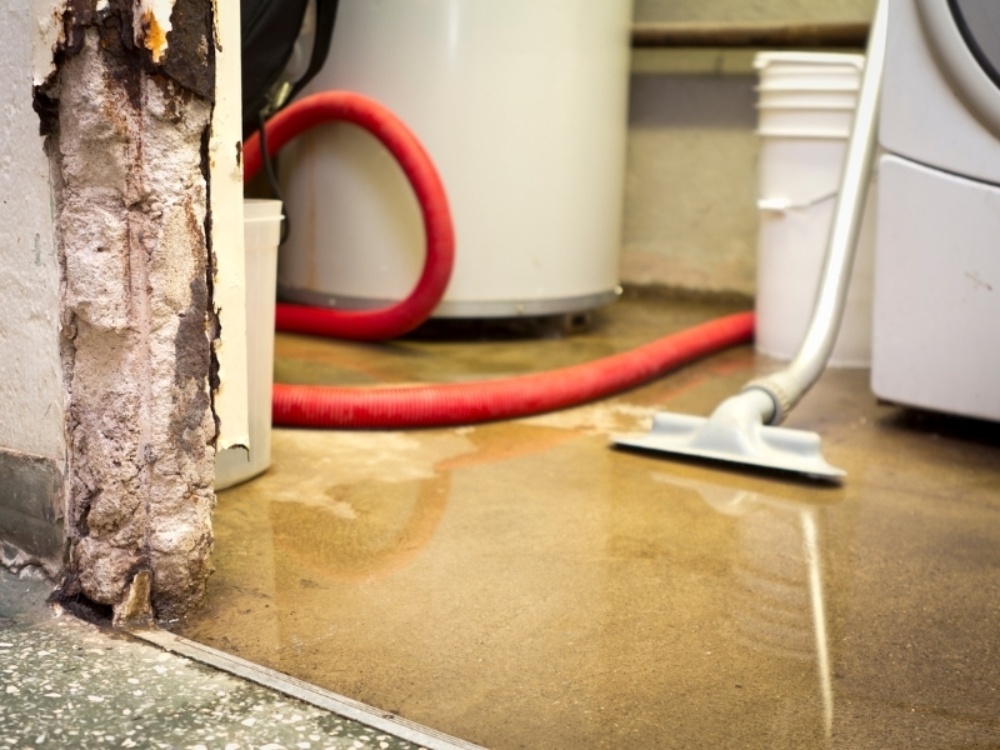
- Do not use a household vacuum on water, and do not run electrical equipment while you are standing in it.
- Do not flush toilets or run drains if you suspect a sewer backup. See our page on sewage backup cleanup.
- Do not wait several days for an adjuster before starting mitigation. Most policies expect you to take reasonable steps to limit further damage, so check yours and call your insurer early.
Why Basements Flood
A basement sits below ground, and water moves downhill. When it has nowhere else to go, your lowest floor is where it ends up. These are the usual causes.
- Heavy rain and flash floods. Arkansas gets intense downpours, and saturated soil pushes groundwater against foundation walls. That pressure forces water through cracks, floor joints, and window wells. We covered the aftermath in our post on steps to take after a flash flood.
- Sump pump failure. The timing is cruel. Storms knock out power at the exact moment the pump is working hardest, and a pump with no battery backup simply stops. Pumps also wear out with age.
- Gutters, downspouts, and grading. A clogged gutter spills at the foundation, a downspout that empties beside the house does the same, and soil that slopes toward the wall sends runoff straight to it.
- Sewer or drain backup. During heavy rain a city sewer can overload and push wastewater up through floor drains. That water is contaminated.
- Plumbing failures. A burst pipe, a failed water heater tank, or a washing machine hose can put hundreds of gallons into a basement in a short time. Our article on what causes pipes to burst covers prevention.
Clean, Gray, or Black Water: Why It Matters
Where the water came from decides how it has to be handled. Restoration professionals use three categories from the ANSI/IICRC S500 standard.
- Category 1 (clean): a broken supply line or a leaking faucet.
- Category 2 (gray): a dishwasher, washing machine, or a toilet overflow without solid waste.
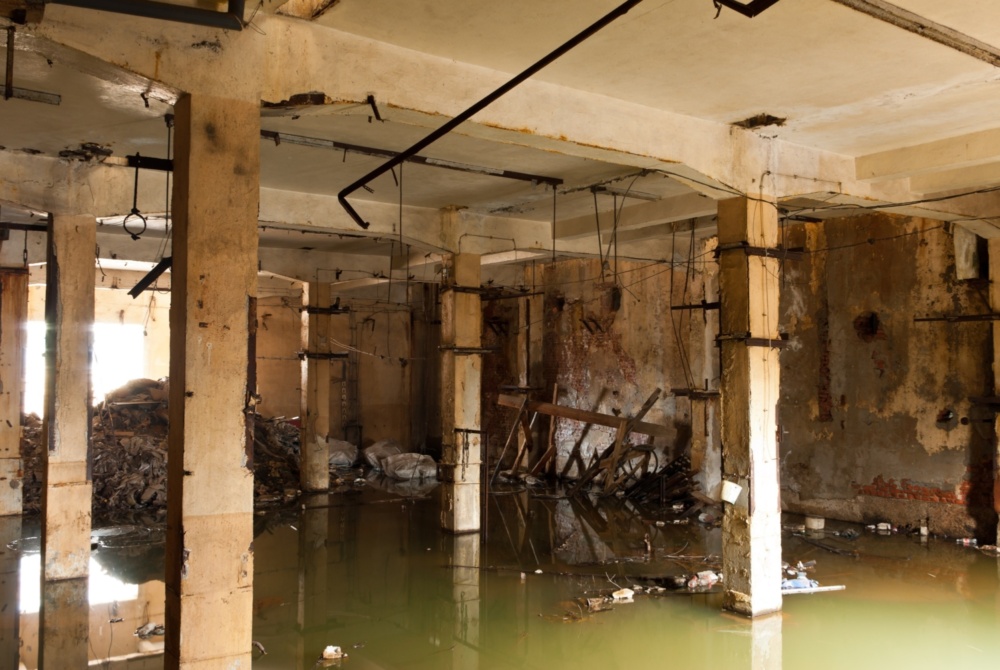
- Category 3 (black): sewage, and water that comes in from outside, because it has crossed soil and picked up bacteria and debris on the way.
Time matters too. Clean water that sits for a day or two can slide into a worse category as bacteria grow. A carpet that could have been dried on day one may need to be removed on day three. If you are not sure where your water came from, treat it as contaminated until a professional tells you otherwise.
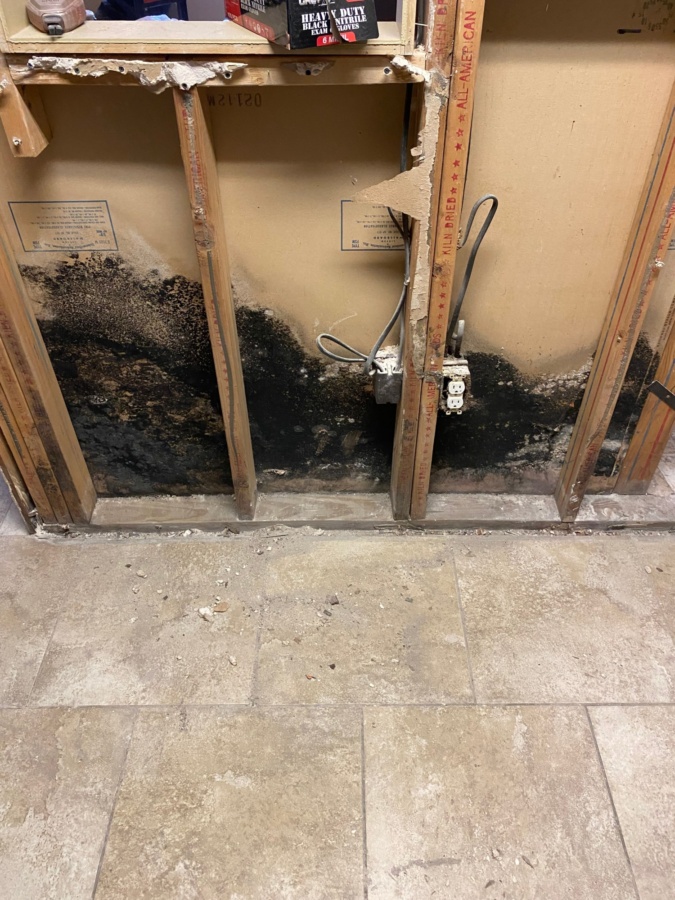
What happens when water sits. Within hours, drywall wicks water upward, well past the line you can see. Within 24 to 48 hours, mold can begin to grow. Wood flooring starts to cup. Stored cardboard collapses, and electronics corrode. If the water sits for days, it reaches the subfloor, the insulation, and the back side of walls where you will not notice it until the smell starts.

Can You Handle It Yourself?
In a narrow case, yes. If an inch or two of clean water from a supply line spilled onto a concrete floor and you caught it quickly, a wet vac, towels, and a few fans may be enough.
Beyond that, it gets complicated, and the problem is what you cannot see. Moisture hides in wall cavities, under carpet padding, and inside insulation. A surface can feel dry while the framing behind it is still wet, and that is where mold starts. Professionals use moisture meters and thermal imaging cameras to map where the water went, then keep drying until the readings return to normal. Our article on why you should not DIY restoration after a flood goes into more detail.
What Professional Basement Restoration Looks Like
When our crew arrives at a flooded basement, the sequence goes roughly like this.
- Assess and make it safe. We identify the water source, judge how contaminated it is, check the electrical situation, and look for structural concerns.
- Remove the water. Pumps and truck-mounted extractors take out standing water quickly.
- Map the moisture. Infrared cameras and moisture meters show which walls, floors, and materials are wet, including areas you would never guess.
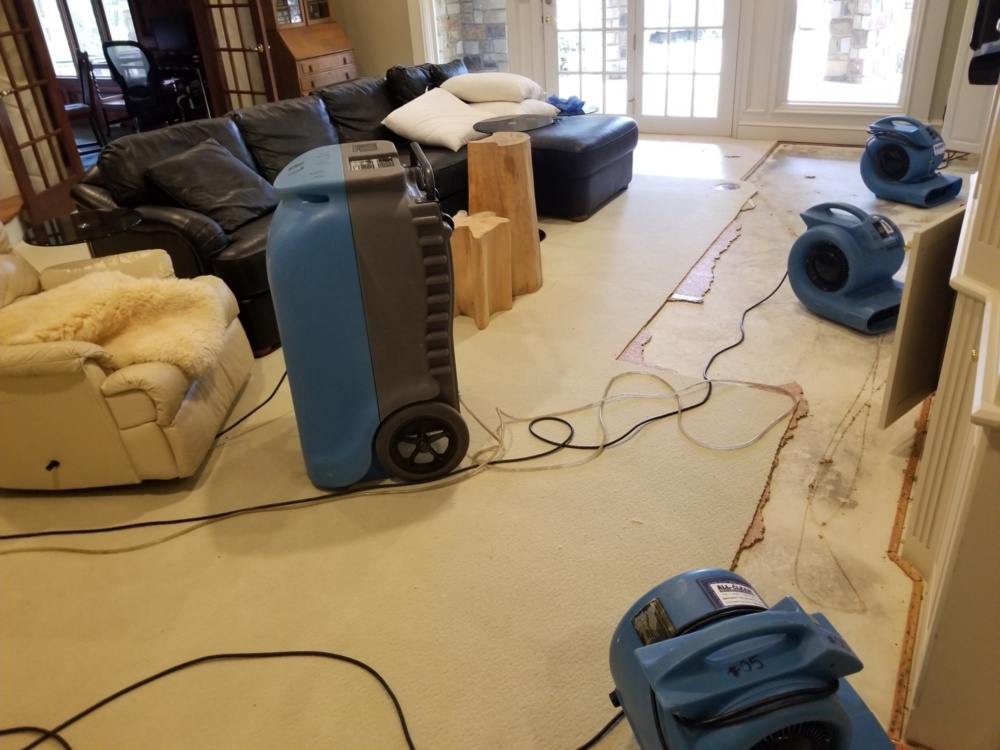
- Dry the structure. Industrial air movers and dehumidifiers pull out what extraction could not. We check readings during the job and do not call it finished until the structure is dry.
- Clean and sanitize. Affected surfaces are cleaned and treated with EPA-approved disinfectants. If belongings were affected, our content cleaning team can often save items you assumed were lost.
- Prevent mold. We apply antimicrobial treatment and watch humidity. If mold has already started, we can handle mold remediation as well.
- Repair. Because we handle reconstruction, we can replace drywall, flooring, and cabinets so you work with one company from start to finish.
Flood Insurance, Water Damage Coverage, and Sewer Backup Are Different Things
This is where many homeowners get caught off guard. A standard homeowners policy generally covers sudden and accidental water damage, such as a burst pipe, but typically excludes flooding from rising surface water or groundwater. That falls under separate flood insurance, which comes from the National Flood Insurance Program or a private carrier. Sewer or drain backup usually requires its own endorsement.
A single basement flood can land in any of those three categories, or between them. The time to read your policy is before the storm, not after. We cannot interpret your coverage, and your agent can. What we can do is document every step of the job so the claim has solid support. See our guide to insurance coverage for water damage for more.
How to Keep It From Happening Again
- Install a sump pump with battery backup, and test it every spring and before storm season. Pour a bucket of water into the pit and watch it run.
- Clean your gutters and extend downspouts several feet away from the foundation.
- Check the grading. Soil should slope away from the house, not toward it.
- Seal foundation cracks before they become a way in for water.
- Add water alarms near the water heater, the washing machine, and the lowest drain. They cost little and give you early warning.
- Look at your plumbing. Replace old washing machine hoses and have an aging water heater checked.
- Ask a plumber about a backwater valve if your home has had sewer backups.
- Store items in plastic bins off the floor. Cardboard boxes on concrete are the first thing lost.
If you own or manage a commercial building, our PRIME Promise is a free emergency agreement that lines up response and risk management ahead of time. Ask us about it.
When to Call a Professional
Call right away if the water is more than a couple of inches deep, has been standing for more than a day, came from outside or a drain, reached walls, carpet, or finished space, or if you cannot find the source. Call if you smell something musty or have any doubt about the wiring. A short phone call costs nothing, and the delay costs more.
Need help with a flooded basement? All-Clean USA responds 24 hours a day, 365 days a year from Conway, Jonesboro, and Hot Springs. Call 866-360-3473 or contact us online. We have been helping Arkansas families and businesses recover from water damage since 1993.
We have 3 convenient locations in Arkansas to serve you:
Central Arkansas – 499 Lower Ridge Rd, Conway
Northeast Arkansas – 3411 One Place, Jonesboro
Southwest Arkansas – 169 Akers Rd, Hot Springs
This page is general information, not insurance, legal, or engineering advice. All-Clean USA is a restoration contractor, not an insurer or law firm. Confirm coverage details with your insurance agent or carrier.
Flooded Basement FAQ
-
How long does it take to dry a flooded basement?
It depends on how much water came in, how long it sat, and what it reached. Minor cases may take a few days. Extensive flooding can take a week or more. The job is done when moisture readings return to normal, not when the surface feels dry.
-
Does homeowners insurance cover a flooded basement?
It depends on the cause. A burst pipe is usually covered. Rising water from outside generally is not, unless you carry separate flood insurance. Sewer backup typically needs an endorsement. Check your policy and talk to your agent.
-
Can mold grow after a basement flood?
Yes. Mold can begin to grow within 24 to 48 hours of a water loss, which is why fast drying matters. If you notice a musty smell days after a flood, hidden moisture is a likely cause.
-
Do I have to throw away everything that got wet?
Not necessarily. Porous items like carpet padding and particleboard furniture that touched contaminated water usually cannot be saved. Many hard items, clothing, and documents can be cleaned and restored. A professional can assess what is salvageable before you throw it out.
-
Is it safe to stay in the house after a basement flood?
Often yes, as long as you stay out of the flooded area and the electrical system is safe. If the water was contaminated, if the smell is strong, or if you have someone in the home with breathing problems or a weakened immune system, ask us whether you should stay elsewhere for a while.
Services FAQ
-
What types of restoration services do you offer?
We specialize in water damage, fire and smoke damage, mold remediation, and storm damage for both residential and commercial properties.
-
How quickly can you respond to an emergency?
We offer 24/7 emergency response, 365 days a year. Our team is always on standby, ready to respond immediately to fire and smoke damage and water damage emergencies. Our top priority is you—getting your home and your life back to normal as quickly and smoothly as possible, with minimal stress.
-
Do you work with insurance companies?
Yes, we will work with your insurance company to streamline the claims process, ensuring you receive the coverage you're entitled to as quickly as possible for your residential restoration services.
-
Do you handle the insurance claims process?
Yes, we work directly with most insurance companies to simplify the claims process for you. We can document the damage, provide estimates, and communicate with your insurer on your behalf to ensure you get the coverage you need.
-
How long does the restoration process usually take?
The timeline depends on the extent of the damage. We’ll provide an estimated timeline after our initial assessment. Our team will work efficiently to minimize disruption and keep you informed every step of the way.
-
What steps do you take to ensure safety during restoration?
Our team follows strict safety protocols, uses personal protective equipment, and utilizes specialized equipment to ensure the health and safety of occupants and our crew.
-
Are your technicians certified?
Yes, all our technicians are certified and trained in the latest restoration techniques and industry standards to provide high-quality, reliable service.
-
Can you help with reconstruction after the cleanup?
Yes, in addition to cleanup and restoration, we offer reconstruction services to repair and rebuild areas that were damaged, providing a full-service solution.
-
How do you determine what items can be salvaged?
Our team conducts a thorough assessment of your belongings and property. We use specialized equipment to determine which items can be restored and which may need to be replaced, helping to salvage as much as possible.
-
What can I do to prevent damage in the future?
Having the right response team can make all the difference between a smooth recovery and added frustration. ALL-CLEAN USA’s PRIME Promise Emergency Agreement helps minimize property downtime, income loss, and repair costs by providing immediate response and risk management tools. With this free contract, our team is ready to be on-site within 24 hours, ensuring your property is restored quickly and efficiently.
See What Our Customers Are Saying:

What Sets Us Apart
We are a family-owned disaster restoration and reconstruction company located in Arkansas. Serving Arkansas since 1993, we have built a reputation for delivering the highest level of client satisfaction in the industry by restoring our clients’ properties to a pre-loss condition. Not only do we have our own top-of-the-line equipment, but we also have an all-star team of industry professionals who have completed over 48,000 restoration jobs. Our team of experts provides both residential and commercial services across Arkansas and prioritizes speedy recovery so you can get back to your normal schedule. From the beginning stages of planning and assessment to the final stages of repair and reconstruction, we are a one-stop shop that can satisfy all your needs in one place.
We are here for you 24 hours a day, seven days a week