
Sewage in your home or business is a health emergency before it is a cleanup job. If wastewater has come up through a drain, toilet, or floor, get everyone out of the area, stop running water, and call a professional. All-Clean USA answers the phone 24 hours a day, 365 days a year, with crews working out of our offices in Conway, Jonesboro, and Hot Springs.
In the restoration industry’s ANSI/IICRC S500 standard, sewage is Category 3 water, usually called black water. That label changes how the work gets done. The water can carry bacteria, viruses, and parasites, and anything porous it touches must be handled differently than it would be after a clean water leak.
Contact Us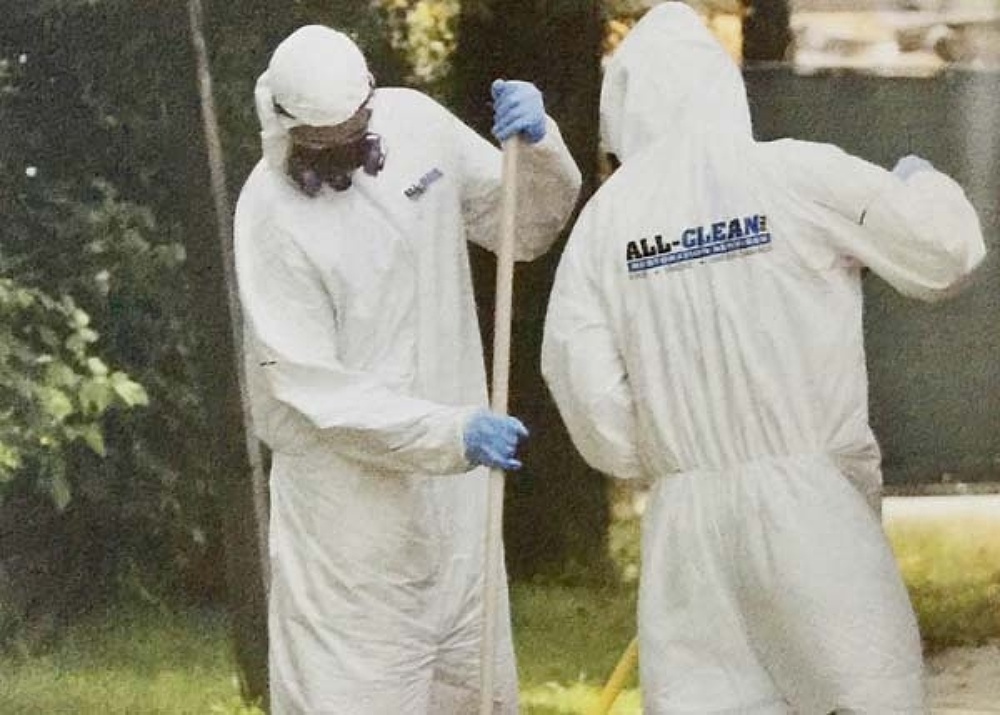
What to Do Right Now
- Stay out of the water. Keep children and pets away too, and do not walk through it to grab belongings.
- Stop adding water to the system. Do not flush toilets or run sinks, showers, washing machines, or dishwashers. More water just means more sewage coming back up.
- Think about electricity. If the area is dry around the breaker panel, you can switch off power to the affected rooms. If there is standing water near outlets or the panel, do not go in. Call an electrician.
- Skip the household vacuum and fans. A regular vacuum is not built for this, and fans can spread contaminated droplets through the air.
- Take photos and video of the damage before anything is moved. Your insurer will want them.
- Call us. The sooner contamination is contained, the less of your home it reaches.
Why Sewage Is Not Like Other Water Damage
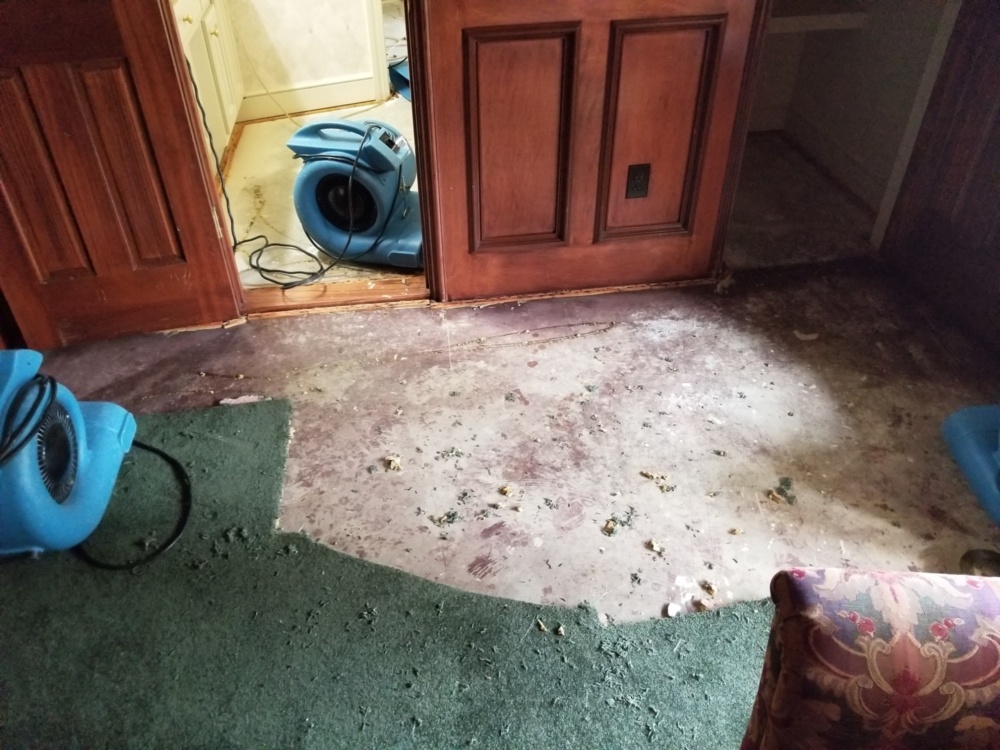
When a supply line breaks, the water is clean when it hits your floor, and there is a good chance the carpet, padding, and drywall can be dried and saved. Sewage changes that. Contamination soaks into porous materials and cannot be reliably washed back out. Carpet, padding, insulation, and drywall that sewage has touched are typically removed and thrown away. Materials that can stay, such as framing and concrete, are cleaned and disinfected first, then dried.
That is why a box fan and a bottle of bleach do not finish the job. Surface cleaning can leave contamination behind in the places you cannot see: under baseboards, inside wall cavities, beneath flooring.
Common Causes of Sewage Backups
Most backups start in one of a few places.
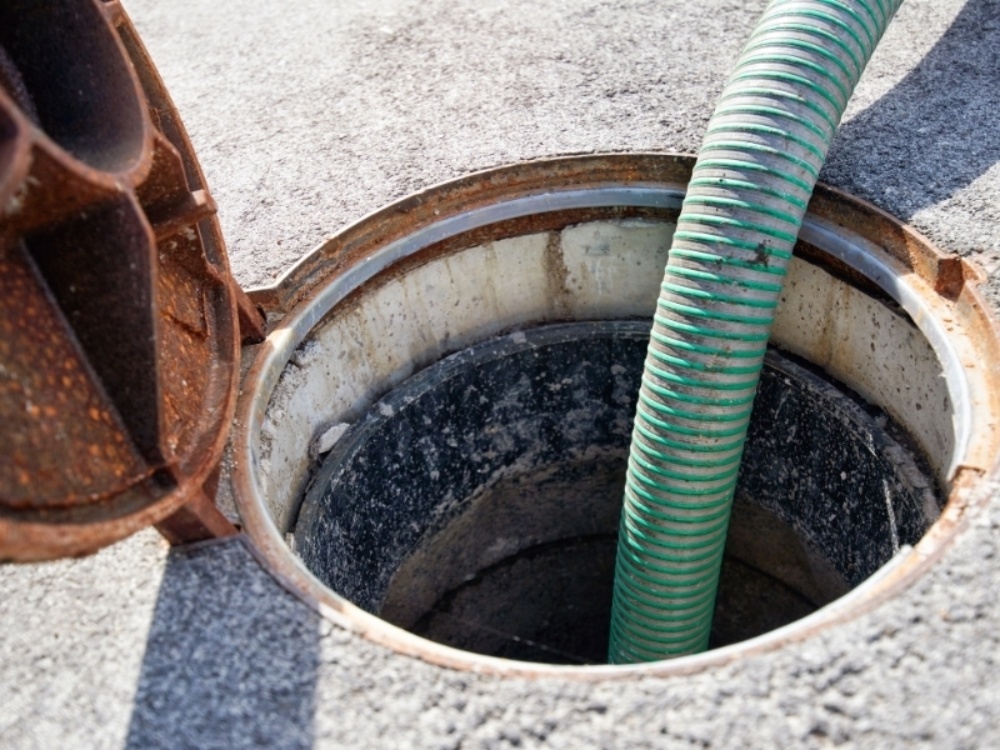
- A clog in the main sewer line from tree roots, grease, or items that should never have been flushed
- Old or damaged lines that have cracked, shifted, or collapsed
- Heavy rain that overloads a city sewer or saturates a septic system, a regular problem during Arkansas storm season
- A failed sump or ejector pump
- Commercial grease traps and kitchen drain lines that are not serviced often enough
Warning signs usually show up first. Slow drains in more than one fixture, gurgling from a toilet or tub, and a sewer smell near a floor drain all point to a problem in the line. If you notice them, call a plumber before you get a full backup.
Cleanup does not fix the blockage itself. A licensed plumber needs to find and repair the cause, and we are glad to coordinate with yours, so the work happens in the right order.
How All-Clean USA Handles a Sewage Backup
Every job is a little different, but the work generally follows these steps.
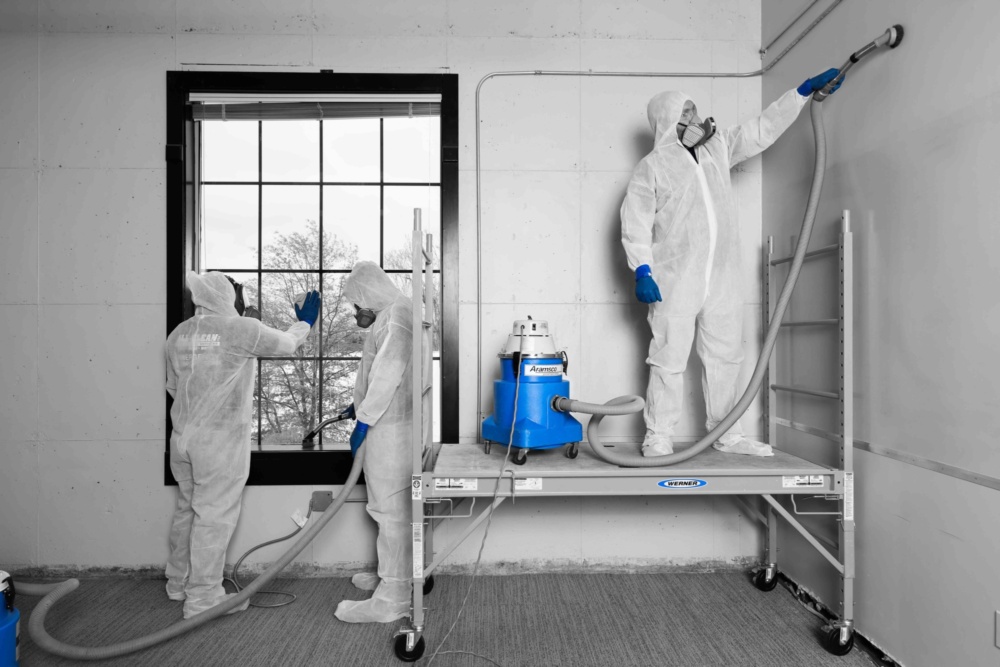
- Safety check and assessment. A technician finds the source, estimates how far contamination has spread, and checks for electrical hazards before work starts.
- Containment. We isolate the affected area so contamination does not travel on shoes, equipment, or airflow into clean rooms.
- Water extraction. Pumps and truck-mounted equipment pull out standing sewage quickly.
- Removal of contaminated materials. Carpet, padding, drywall, insulation, and other porous materials that cannot be made safe are cut out, bagged, and disposed of properly.
- Cleaning and disinfecting. Remaining surfaces are cleaned and treated with EPA-approved disinfectants.
- Structural drying. Moisture meters and digital infrared thermographic cameras show where water went, including areas that feel dry to the touch. Air movers and dehumidifiers then dry the structure. With more than 1,000 air movers and 250 dehumidifiers in our inventory, large jobs do not leave us short on equipment.
- Odor control and mold prevention. Mold can begin growing within 24 to 48 hours of a water loss, so antimicrobial treatment and humidity monitoring are part of the job. If mold has already taken hold, our team handles mold remediation too, with third-party environmental consultants doing the testing and clearance.
- Rebuild. We also do reconstruction, so the same company that cleaned the space can replace flooring, drywall, and cabinetry.
Throughout the job we document what we find and what we remove, so you and your insurer have a clear record.

Insurance and Sewage Backups
Sewage coverage is one of the most misunderstood parts of a homeowners policy. Many standard policies do not cover sewer or drain backup unless you added a water backup endorsement, and the limit on that endorsement is often lower than the rest of the policy. Commercial policies can treat it differently again.
We cannot tell you what your policy covers. Only your insurer can do that. What we can do is document the loss with photos, moisture readings, and itemized estimates, and communicate with your adjuster so the claim has what it needs. For more on how coverage works, read our guides on insurance coverage for water damage and what to do when insurance denies a restoration claim.

Homes and Businesses We Serve
Sewage backups happen in houses, apartments, and rentals, but they hit commercial properties especially hard. A closed restroom or kitchen can mean lost revenue by the hour. We have worked with restaurants, hotels, schools, churches, offices, and healthcare facilities across the state. See our commercial restoration pages for details.
If you manage a commercial property, ask about our PRIME Promise. It is a free emergency agreement that sets up response and risk management before anything goes wrong, so the first call you make in a crisis is already a routine one.
Why Arkansas Property Owners Call All-Clean USA
All-Clean USA is a family-owned company that has worked in Arkansas since 1993 and has completed more than 48,000 jobs. We are not a franchise. The people who answer your call work and live in your community. Our technicians hold IICRC certification in water damage restoration, applied structural drying, and microbial remediation, and we follow IICRC standards on every sewage job, including the ones that happen at 3 a.m. on a holiday.
Sewage backup? Call now. Reach All-Clean USA at 866-360-3473, any hour of any day, or contact us online.
We have 3 convenient locations in Arkansas to serve you:
Central Arkansas – 499 Lower Ridge Rd, Conway
Northeast Arkansas – 3411 One Place, Jonesboro
Southwest Arkansas – 169 Akers Rd, Hot Springs
This page is general information. All-Clean USA is a restoration contractor, not an insurer, plumber, or law firm. Coverage depends on your policy, so confirm details with your insurance agent or carrier.
Sewage Backup FAQ
-
Is a sewage backup dangerous to my health?
Yes. Sewage can carry bacteria such as E. coli and Salmonella, along with viruses and parasites. Exposure can cause stomach illness and skin or eye infections. Young children, older adults, and anyone with a weakened immune system are at higher risk. Stay out of the area until it has been cleaned and disinfected.
-
Can I clean up a sewage backup myself?
A small overflow from one fixture that stayed on a hard floor is sometimes handled by homeowners. Anything that reached carpet, drywall, or a larger area should go to a professional, because of the contamination, the protective equipment involved, and the moisture that hides in walls and subfloors.
-
Who do I call first, a plumber or a restoration company?
Both, and it is fine to call at the same time. If the line is still backing up, a plumber needs to clear it. Meanwhile, contamination keeps spreading, so call us right away to start containment and cleanup.
-
How long does sewage cleanup take?
It depends on how much water came in and what it reached. Smaller jobs may take a few days. Extensive damage can take a week or more, especially if reconstruction is needed. After our assessment we give you a more accurate timeline.
-
Will I need to leave my home?
Not always. You should stay out of the affected area until it is cleared. If the backup involves bathrooms, the kitchen, or large parts of the home, or if the odor and contamination are widespread, we may recommend staying elsewhere for a short time. We will tell you after we see the site.
-
What does sewage backup cleanup cost?
Cost depends on how much area was affected, how much material has to be removed, how long drying takes, and whether you need rebuilding afterward. We give a detailed estimate after the assessment and work with your insurance company when coverage applies.
Services FAQ
-
What types of restoration services do you offer?
We specialize in water damage, fire and smoke damage, mold remediation, and storm damage for both residential and commercial properties.
-
How quickly can you respond to an emergency?
We offer 24/7 emergency response, 365 days a year. Our team is always on standby, ready to respond immediately to fire and smoke damage and water damage emergencies. Our top priority is you—getting your home and your life back to normal as quickly and smoothly as possible, with minimal stress.
-
Do you work with insurance companies?
Yes, we will work with your insurance company to streamline the claims process, ensuring you receive the coverage you're entitled to as quickly as possible for your residential restoration services.
-
Do you handle the insurance claims process?
Yes, we work directly with most insurance companies to simplify the claims process for you. We can document the damage, provide estimates, and communicate with your insurer on your behalf to ensure you get the coverage you need.
-
How long does the restoration process usually take?
The timeline depends on the extent of the damage. We’ll provide an estimated timeline after our initial assessment. Our team will work efficiently to minimize disruption and keep you informed every step of the way.
-
What steps do you take to ensure safety during restoration?
Our team follows strict safety protocols, uses personal protective equipment, and utilizes specialized equipment to ensure the health and safety of occupants and our crew.
-
Are your technicians certified?
Yes, all our technicians are certified and trained in the latest restoration techniques and industry standards to provide high-quality, reliable service.
-
Can you help with reconstruction after the cleanup?
Yes, in addition to cleanup and restoration, we offer reconstruction services to repair and rebuild areas that were damaged, providing a full-service solution.
-
How do you determine what items can be salvaged?
Our team conducts a thorough assessment of your belongings and property. We use specialized equipment to determine which items can be restored and which may need to be replaced, helping to salvage as much as possible.
-
What can I do to prevent damage in the future?
Having the right response team can make all the difference between a smooth recovery and added frustration. ALL-CLEAN USA’s PRIME Promise Emergency Agreement helps minimize property downtime, income loss, and repair costs by providing immediate response and risk management tools. With this free contract, our team is ready to be on-site within 24 hours, ensuring your property is restored quickly and efficiently.
See What Our Customers Are Saying:
What Sets Us Apart
We are a family-owned disaster restoration and reconstruction company located in Arkansas. Serving Arkansas since 1993, we have built a reputation for delivering the highest level of client satisfaction in the industry by restoring our clients’ properties to a pre-loss condition. Not only do we have our own top-of-the-line equipment, but we also have an all-star team of industry professionals who have completed over 48,000 restoration jobs. Our team of experts provides both residential and commercial services across Arkansas and prioritizes speedy recovery so you can get back to your normal schedule. From the beginning stages of planning and assessment to the final stages of repair and reconstruction, we are a one-stop shop that can satisfy all your needs in one place.
We are here for you 24 hours a day, seven days a week