


How Much Does Water Damage Restoration Cost in Arkansas?
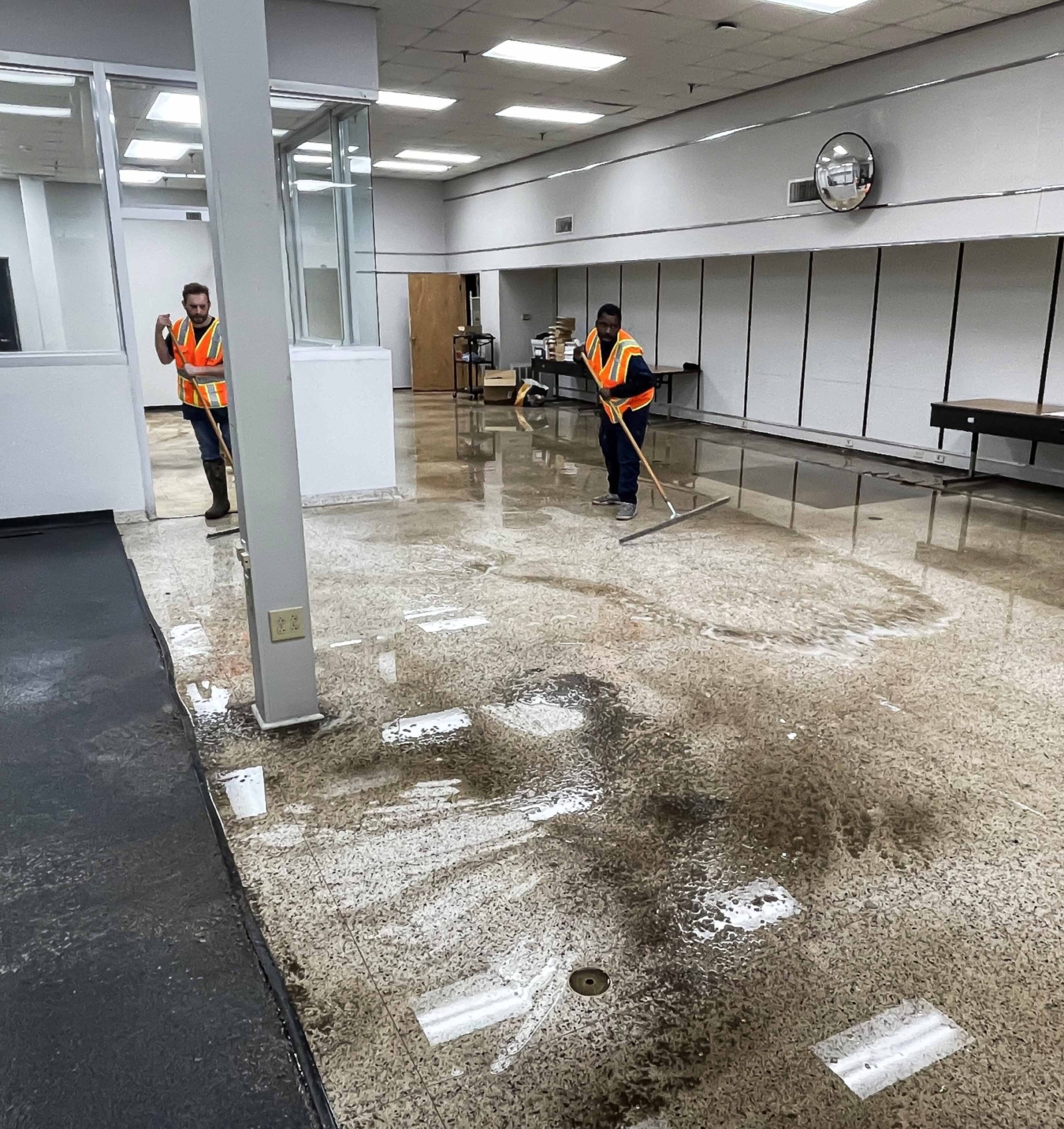
By the All-Clean USA Restoration Team | Reviewed by Danny-Joe Crofford, Executive Vice President of Sales and Marketing | Updated November 2026
Quick answer: Most Arkansas water damage restoration jobs cost between $450 and $16,000. A small clean-water leak caught the same day sits at the low end. Sewage, floodwater, or water that has soaked into a home for several days pushes the bill toward the top, and sometimes past it. A fair rule of thumb for the cleanup and drying portion alone is $3.50 to $7.50 per square foot, with repairs and rebuilding priced separately.
Nobody budgets for a burst pipe. It happens on a Sunday night, or while you're at work, or in the middle of an ice storm, and the first question after "is everyone safe?" is almost always "what is this going to cost me?"
We've been restoring Arkansas homes and businesses since 1993, out of our offices in Conway, Jonesboro, and Hot Springs, and we've completed more than 48,000 jobs. We can't give you an exact number without seeing your property. What we can do is show you where the ranges come from, so the estimate you eventually get makes sense and you can tell a fair one from a padded one.
Water Damage Restoration Cost at a Glance
These ranges cover typical Arkansas jobs. They combine published estimates from national cost guides and Arkansas restoration markets with how we scope jobs in the field. They are not an All-Clean price list.
| Damage level | What it usually looks like | Typical cost range |
|---|---|---|
| Minor | Clean water, one small area, caught within a day. A dishwasher line, a slow supply leak, a small appliance failure. | $450 to $1,500 |
| Moderate | One to three rooms. Some wet drywall or flooring has to come out. Drying runs several days. | $1,500 to $5,000 |
| Major | Multiple rooms or floors. Gray water, or clean water that sat too long. Real material removal and some rebuilding. | $5,000 to $16,000 |
| Severe | Sewage or floodwater through much of the home, structural drying, contents loss, and a full rebuild. | $16,000 and up |
Notice how wide the spread is. That isn't vagueness. Water damage is one of the few home emergencies where the same leak can cost $800 or $8,000 depending on what happens in the first day.
What Actually Sets the Price
The category of water
This is the biggest single driver, and it's the one homeowners hear about least. Restoration professionals sort water into three categories by how contaminated it is.
- Clean water comes from a broken supply line, a leaking faucet, or a failed water heater. It's the cheapest to deal with, but only if it's dried fast.
- Gray water comes from dishwashers, washing machines, and toilet overflows without solid waste. It carries bacteria and needs careful handling and sanitizing.
- Black water means sewage backups and flooding. It's hazardous, and everything porous it touches usually has to be removed and thrown away.
Clean water left alone for two or three days drifts into gray. That's why timing and category are really the same cost driver.
How much area is wet, and how deep it went
Square footage matters, but so does what's underneath the surface. Water travels. It wicks up drywall, spreads under flooring, and settles into insulation and subfloors you can't see. We use infrared thermal cameras and moisture meters to map the real footprint, because the wet area is almost always bigger than the stain on the ceiling.
Here's the math at the typical $3.50 to $7.50 per square foot for extraction, drying, and sanitizing:
- 400 square feet (a living room and hallway): roughly $1,400 to $3,000
- 1,000 square feet (a small home's main floor): roughly $3,500 to $7,500
How long it sat
Mold can begin growing within 24 to 48 hours in wet conditions, and Arkansas humidity doesn't help. A home that's already holding moisture in the air dries more slowly, which means more equipment, more days, and a higher bill. Every hour you wait adds cost.
Where in the house it happened
A flooded basement is a different job than a wet bathroom floor. Basements often need pumping before drying can even begin. Crawl spaces are cramped and hard to inspect. Water that came through a ceiling means insulation and drywall overhead. Kitchens and baths add cabinetry, plumbing, and fixtures.
Materials that got wet
Hardwood, carpet pad, drywall, and insulation each have different rules. Some can be dried and saved. Others, like soaked carpet pad or wet drywall exposed to gray water, should go. Replacing a small area of tile costs very little. Replacing an entire kitchen's worth of cabinets does not.
Cost Breakdown by Service
Most invoices are made up of several services. Here's what each one typically runs in Arkansas. These are individual line items, so you will not see every one on every job.
| Service | Typical range |
|---|---|
| Water extraction (pumps and vacuums) | $500 to $1,500 |
| Structural drying and dehumidification | $1,000 to $3,000 |
| Cleaning, sanitizing, and deodorizing | $500 to $2,000 |
| Carpet, pad, and flooring removal and replacement | $200 to $1,000 and up |
| Drywall and insulation removal and replacement | $1,000 to $5,000 |
| Mold remediation, if it develops | $500 to $3,800 |
If any single line looks far outside these ranges, ask why. Sometimes there's a good reason, like a large basement or hard-to-reach framing. Sometimes there isn't.
Common Arkansas Scenarios
Burst pipe in an ice storm. A frozen supply line that's caught quickly, with a shutoff valve found fast, often lands between $1,500 and $5,000 once drywall and flooring in one or two rooms are included. If it runs all night in a closed-up house, expect more. Our guide to preventing and handling frozen and burst pipes covers what to do in the first hour.
Wet basement after heavy rain. An inch of clean rainwater might stay near $500 to $1,500. Deeper water, or anything that picked up contaminants on the way in, climbs quickly. A basement with a couple of feet of sewage-contaminated water starts near $2,800 and goes up from there.
Roof or ceiling leak after a storm. Storm season in Arkansas means shingles lift and flashing fails. Ceiling damage typically runs about $450 to $1,600, not counting the roof repair itself.
Washing machine or appliance failure. Appliance-related water damage often runs $175 to $500 per unit for the cleanup. The wet flooring around it is a separate line.
Sewage backup. This one is its own category. Plan on the higher ranges, and read our guide on whether it's safe to stay in a house with a sewage backup before you decide anything.
Why Prices Vary Across Arkansas
Costs in Conway don't look exactly like costs in Jonesboro or Hot Springs, and a few local realities explain most of the difference.
Labor and material costs shift between Central Arkansas and the more rural parts of the state. Older homes, common in towns like Hot Springs, often have aging plumbing, plaster, or crawl spaces that complicate drying. Spring flash floods in the northeast and tornado season statewide create sudden demand surges. And after-hours or holiday emergency calls can carry different rates at some companies, so it's worth asking up front.
Will Insurance Cover It?
Often, yes, if the damage was sudden and accidental. A burst pipe or a failed appliance is typically covered. Flooding from rising water and sewer backups usually are not, unless you added the right endorsement or a separate flood policy. Slow leaks and neglected maintenance are commonly excluded.
Your deductible matters too. Many Arkansas policies carry deductibles of $1,000 or more, so a minor job may fall entirely under it. That doesn't mean you should skip professional drying. It means you should know the number before you call your agent.
We work with most insurers. We document the damage, write up the estimate, and talk to your adjuster for you. Our practical guide to working with your insurance adjuster explains what to expect. For the full picture, read what Arkansas homeowners need to know about water damage coverage, and if a claim gets turned down, here's what to do if insurance denies a restoration claim.
How to Keep the Cost Down
You can't control the water, but you can control a few things that matter.
- Stop the source. Shut off the main valve if you can do it safely.
- Call a professional right away. Not tomorrow. Drying on day one costs a fraction of what it costs on day four.
- Take photos and video before anything is moved. Your insurer will want them.
- Don't start tearing out materials yourself. You may remove something that could have been saved, or miss something that should have gone. Our list of costly mistakes to avoid after water damage covers the common ones.
- Ask for a written scope. A real estimate lists what will be done, room by room.
What a Fair Estimate Looks Like
A trustworthy quote doesn't arrive as a single number on the back of a business card. Look for moisture readings taken before work begins, a written scope that names the rooms and the work, a drying plan with a way to document progress, and a clear split between mitigation (stopping the damage) and reconstruction (rebuilding).
Be careful with any company that pushes you to rip out everything, or one that promises to dry a soaked structure in a day with a single fan. Both are warning signs. Credentials matter here too. Our technicians hold IICRC certification, and the drying we do follows IICRC standards. If you're not sure what that really means, we explained it here.
Our process is straightforward. We start with an inspection and moisture mapping, then extract standing water, dry the structure with air movers and dehumidifiers, clean and sanitize, and finish with repairs or full reconstruction if you need it. You get an estimate after the assessment, and we're happy to walk you through it line by line.
Frequently Asked Questions
How much does it cost to dry out a house after a flood?
It depends on the water and the footprint. A contained job might be a few thousand dollars. A flood that reaches multiple rooms and carries contaminated water can reach $16,000 or more once demolition, drying, and rebuilding are included.
Is water damage restoration cheaper than ignoring it?
Almost always. Wet materials breed mold, weaken framing, and ruin finishes. Mold alone can add $500 to $3,800 to a job that was otherwise just drying.
How long does water damage restoration take?
Small jobs usually wrap up in a few days. Extensive damage can take a week or longer, and rebuilding adds time on top. We give you a timeline after the initial assessment.
Can I just rent a fan and dehumidifier myself?
For a tiny, clean-water spill on a hard surface, maybe. For anything that reached walls, subfloors, or insulation, consumer equipment rarely dries deep enough, and hidden moisture is where mold starts.
Do you charge extra for nights and weekends?
Ask any company this before the crew shows up. Water doesn't wait for business hours, and we offer 24/7/365 emergency response across Arkansas.
How fast can you get here?
We're typically on site within a few hours of your call. Our PRIME Promise emergency agreement commits us to an on-site arrival within 24 hours.
Get a Real Number for Your Property
Ranges are useful. An assessment of your actual home is better. If you're dealing with water right now, call our emergency line at 866-386-2269 any hour of the day or night, or learn more about our water damage restoration services in Arkansas.
Please note: The figures in this article are general estimates for educational purposes. They are not quotes, and your actual cost will depend on the conditions at your property. All-Clean USA is a restoration company, not an insurance provider or a law firm. Confirm your coverage with your insurer or agent.
About the author: The All-Clean USA Restoration Team is a family-owned crew of IICRC-certified technicians serving Arkansas from Conway, Jonesboro, and Hot Springs since 1993.
All-Clean USA. We've got you covered.